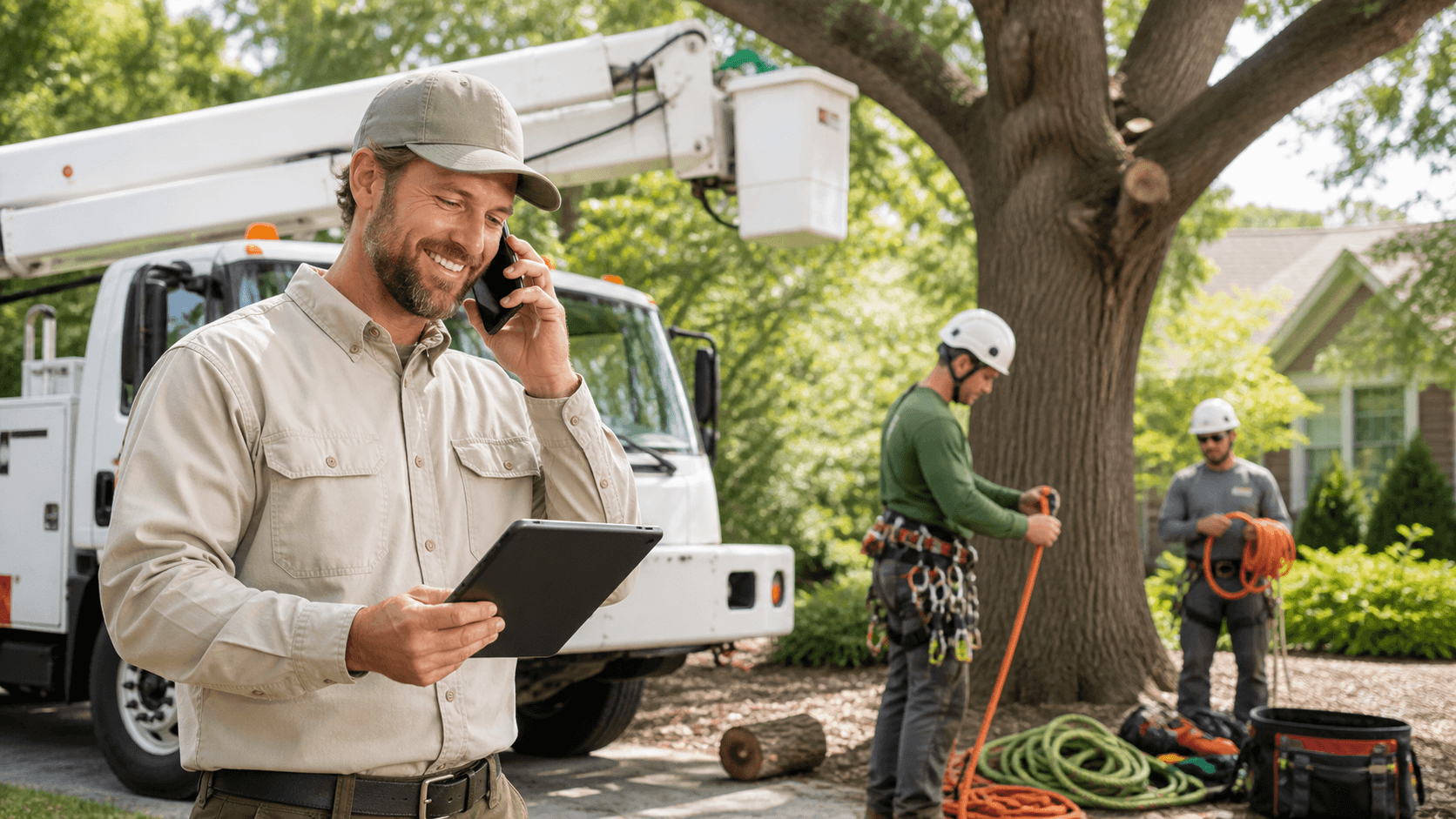
Stop Losing Storm Calls When Crews Are Busy
A missed phone call can turn into a lost tree removal, emergency cleanup, trimming, or stump grinding job. During fall storms and other busy stretches, callers often need help right away. If they reach voicemail while you are running equipment, driving between properties, or working after hours, they may simply try the next tree company.
We see this happen most often when a tree hits a roof, blocks a driveway, damages a fence, or creates a safety concern near a home. A tree service answering service should do far more than write down a name and number. It should respond fast, gather the right details, screen the job, and help the caller move toward a clear next step.
For your business, that means expecting quick answers, tree-service-aware call handling, emergency escalation, appointment booking, and a clear view of what happens to every lead.
What a Tree Service Answering Service Must Handle
Not every tree call has the same level of urgency. A caller asking about routine pruning next month needs a different response than someone with a tree resting on a vehicle or blocking access to their home. Your answering team should know the difference and follow the emergency rules you set.
Calls involving downed power lines deserve extra care. We recommend clear safety language and a defined routing process for your team. Call handlers should never make unsafe promises about utility work or tell callers that a crew can handle a situation outside your established protocol.
A good tree service answering service should collect useful job details on every call, including:
- Caller name, phone number, and service address
- Property type, requested service, and preferred timing
- Tree size, species, or visible damage when the caller knows it
- Access concerns, photo availability, and insurance-related details
- Whether the property has an immediate safety issue
Your call coverage should also handle the services you actually perform without making callers feel confused or rushed. That may include emergency tree removal, storm cleanup, hazardous limb removal, pruning, trimming, stump grinding, lot clearing, land clearing, and tree health consultations.
Before calls go live, we help define your service area, job exclusions, availability rules, and any pricing guidance you want used. This helps keep out-of-area inquiries and poor-fit jobs from taking up crew time.
Every Caller Needs Fast, Accurate Job Qualification
Speed matters because urgent callers rarely wait around. When a large limb is hanging over a roof or a fallen tree has cut off driveway access, the first company that answers has a real opportunity to earn the work. Slow callbacks, especially on nights, weekends, and storm-heavy days, can send that lead elsewhere.
Fast answers only help when the call is qualified correctly. The person handling your calls should determine whether the caller owns the property, whether it is residential or commercial, whether the location falls within your service area, and whether the request matches your services and minimum job requirements.
During the conversation, we recommend screening for issues that may need immediate owner or dispatcher review:
- A tree on a home, vehicle, occupied building, or fence
- Blocked roads, driveways, gates, or emergency access
- Active storm damage or a tree that may fall soon
- Potential danger to people, structures, or nearby utility lines
The goal is to gather facts, not guess. Your answering service should avoid promising exact arrival times, insurance coverage, or work involving utilities. Those details should go to the right person on your team for review.
Scripts matter, but they should not sound stiff. We build call flows around your company name, the words your customers use, your scheduling rules, and your emergency instructions. A natural conversation gives callers confidence while still collecting the details your crews need.
Your Answering Service Should Book Work, Not Take Messages
Message-only answering can create a frustrating gap. A homeowner may leave a voicemail, wait for a callback, and keep contacting tree companies in the meantime. That is especially common when they need a quick estimate or emergency removal.
The better approach is to help qualified callers take the next step during the first conversation. Depending on your workflow, call coverage should be able to book estimates, site visits, consultations, and non-emergency work based on your calendar, service zones, crew availability, and lead-time rules.
Emergency calls may need a different path. Rather than placing them into a standard appointment slot, the system should send a complete notification to the owner, dispatcher, or on-call person. That notification should include the urgency level and the details needed to decide what happens next.
Every handoff should be clean. Your office team and crews should receive the caller's contact information, requested service, location, job notes, available photos, and agreed next step. Nobody wants to call back and ask the same questions all over again.
At Jenny AI, we see voice coverage as one piece of a larger managed-growth system. Better call capture works alongside estimates, websites, local visibility, SEO, PPC, review generation, and custom automation, so leads have a clearer path from first call to booked work.
Demand More From Your Tree Service Answering Service
You should not have to rely on vague assurances that calls are being handled well. Clear reporting helps you see what is happening when your crews cannot answer the phone. Useful reports can show total calls answered, missed-call recovery, qualified leads, booked appointments, emergency escalations, common requests, call times, and outcomes.
That visibility also makes it easier to improve the process. If callers frequently ask for services you do not offer, your qualification questions may need adjustment. If storm calls are reaching the wrong person, your routing rules may need a better backup plan.
Call handling should also fit into the way you already work. We recommend connecting it with your CRM, scheduling platform, dispatch process, estimate workflow, and follow-up system. Good coordination reduces duplicate entry, missed notifications, and leads that disappear after the first conversation.
Seasonal changes deserve attention, too. Fall storm coverage may need faster escalation and broader after-hours availability than routine winter pruning or spring cleanup requests. As your company changes, your scripts, service-area questions, and scheduling rules should change with it.
Phone coverage works best when strong local marketing brings the right calls in. A fast website, our Google Business Profile strategy, map pack visibility, local SEO, PPC, and steady review generation can all support lead flow. The goal is not just answering more calls. It is attracting, qualifying, booking, and following up with better local leads.
Prepare Your Call Coverage Before Fall Storm Season
Before October storm activity and end-of-year scheduling demand pick up, take a close look at your current missed-call process. Review recent voicemails, callback times, unbooked estimates, and emergency opportunities that did not turn into conversations. Then ask a few practical questions: Who answers after hours? What happens when every crew is busy? Are emergency calls routed correctly? Can qualified callers book an estimate without waiting?
Clear scripts, emergency rules, service-area boundaries, available appointment windows, and lead notifications should be in place before the busiest weeks arrive. When the phone starts ringing during a storm, your team should not have to figure out the process on the fly.
Use this checklist to confirm your call coverage is ready:
- After-hours and weekend calls have a designated answer path
- Emergency calls have clear safety language and escalation rules
- Call handlers know your service area, job exclusions, and available services
- Qualified callers can book the appropriate estimate, visit, or consultation
- Owners, dispatchers, and on-call team members receive complete job details
- Missed calls, booked work, and emergency outcomes are tracked and reviewed
A prepared call process helps your tree company respond consistently when demand is highest. With the right details, routing, and follow-up in place, your team can protect safety, reduce missed opportunities, and make better decisions during every storm call.
Turn Every Storm Call Into A Clear Next Step
Jenny AI helps you build a tree service answering service system that captures the right information and keeps urgent leads moving. Our team can help you connect call handling with follow-up, estimates, and local visibility so fewer opportunities slip away. Contact us to discuss a complete system built around your tree company's workflow.