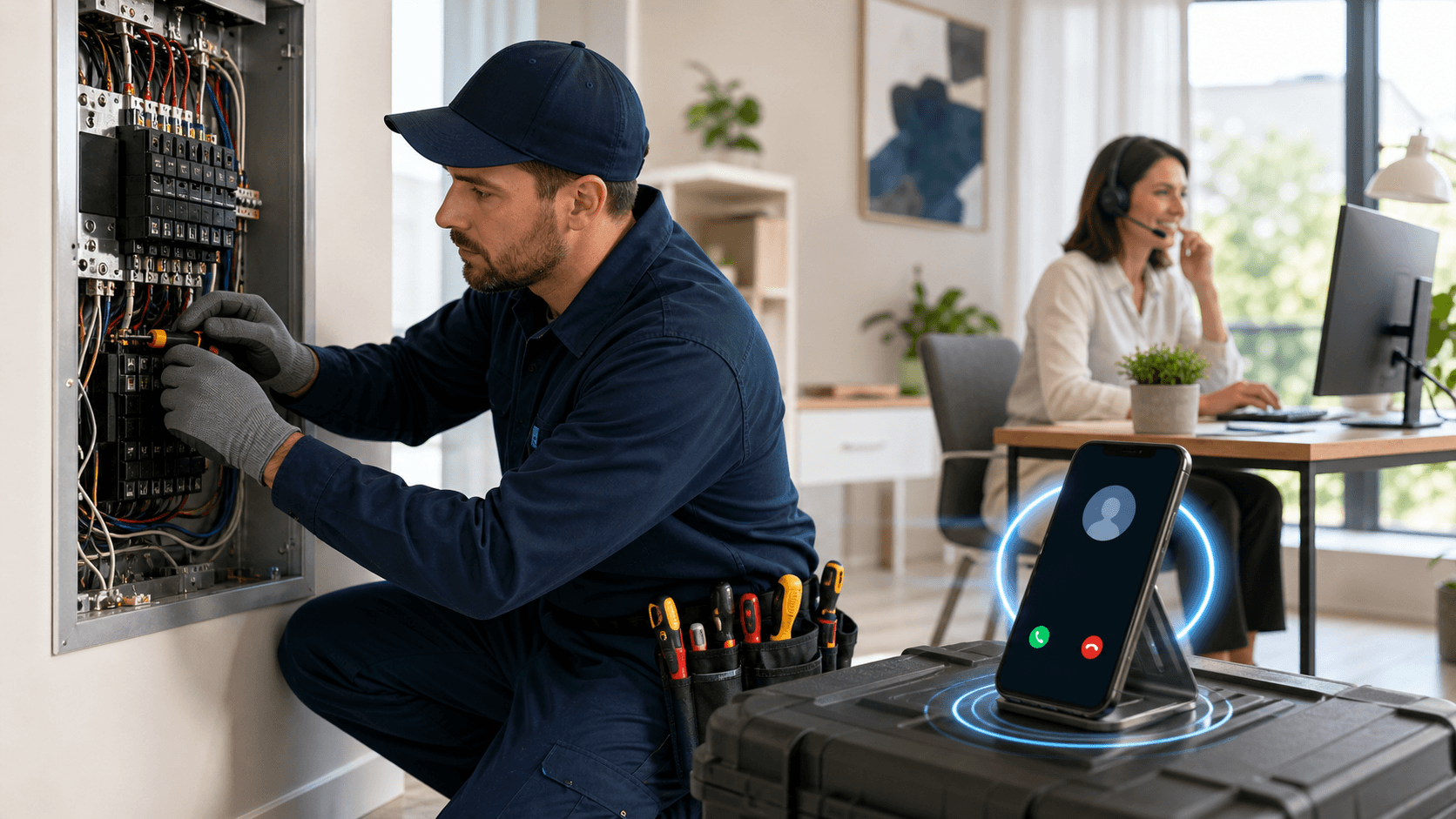
Missed after-hours calls can hurt a service business fast, especially when fall and winter bring urgent problems. No-heat HVAC calls, burst pipes, power concerns, and storm damage rarely wait for office hours. When a customer gets voicemail, we often see them move straight to the next company in Google results.
The real question is bigger than who answers the phone. You need a process that captures the lead, understands the problem, gathers the right details, and helps move the caller toward a booked job. So, should I hire a receptionist or use AI? The best answer depends on your call volume, emergency needs, scheduling process, and follow-up habits.
Stop Missing Emergency Calls After Hours
After-hours calls are often the ones customers care about most. A homeowner with a cold house or water coming through the ceiling is not usually leaving a message and waiting until morning. They want to know whether someone can help, what happens next, and when they can expect a response.
That is why we recommend looking beyond your voicemail box. A reliable after-hours process should help you:
- Answer callers quickly and professionally
- Collect names, phone numbers, addresses, and job details
- Identify urgent situations that need immediate attention
- Give callers clear next steps
- Send useful information to your team for follow-up
Without that process, messages can get lost, incomplete details can slow your team down, and good leads can disappear before the workday starts. Answering a call is only the beginning. The goal is to turn that urgent inquiry into an organized opportunity for your team.
Compare Coverage, Staffing, and Conversion
A receptionist can bring real value to a home-service business. During business hours, a trained person can handle customer questions, support scheduling, calm frustrated callers, and keep communication personal. Yet full-time phone coverage also comes with ongoing staffing needs, including hiring, training, payroll responsibilities, time off, sick days, turnover, and coverage for busy periods.
Evening, weekend, and holiday availability adds another layer. For many smaller contractors, having a person available every hour of every day is hard to manage. A receptionist may be excellent during the day but still leave your business exposed when the office closes or call volume suddenly jumps.
AI call handling gives you a different type of coverage. When it is built around your business rules, it can answer common questions, ask what service the customer needs, collect contact details, document urgency, and send the information to the right person. It should not feel like a confusing maze that makes callers repeat themselves.
When weighing whether to hire a receptionist or use AI, compare what happens after the call is answered. A lower-commitment option does not help if it misses the address, fails to capture the service need, or gives your team no clear way to follow up. We encourage owners to look at the full picture:
- How many calls get answered
- How many complete leads get captured
- How quickly urgent requests reach the right person
- How many inquiries become scheduled jobs
- How much information your team has before returning a call
When a Human Receptionist Makes Sense
There are times when a human receptionist is the stronger fit. If your business handles detailed scheduling, high-ticket consultations, insurance questions, financing conversations, or frequent customer-service calls during the day, a trained team member can provide the extra care those conversations need.
Human support can also be helpful when your callers often need a deeper back-and-forth before they are ready to book. Some jobs involve several questions, special service-area concerns, or coordination between homeowners, property managers, and technicians. In those cases, a receptionist can help guide the conversation with more flexibility.
Still, hiring a person does not automatically fix missed leads. We see better results when receptionists have clear scripts, access to scheduling tools, service-area guidelines, and simple escalation rules for urgent calls. Without a defined process, even good employees can collect incomplete information or send leads into a messy handoff.
For many teams, the answer is not human or AI. A hybrid setup can work well. Your receptionist can manage daytime conversations and customer relationships, while AI supports nights, weekends, lunch breaks, overflow calls, and seasonal surges.
Use AI for Reliable After-Hours Coverage
AI is often a practical starting point when your biggest gap happens after the office closes. It can provide a steady first response during cold snaps, holiday weekends, storms, and other high-demand moments when your team cannot pick up every call.
A well-built AI call process should sound clear, helpful, and focused on getting the right information. We believe it should follow your real business rules, not generic scripts that ignore how your company operates. That means it needs to understand your service categories, service area, business hours, emergency policy, and scheduling preferences.
During a call, the system should be ready to collect:
- The caller's name and best phone number
- The service address
- The type of problem they are having
- Details about urgency or safety concerns
- Their preferred timing for service or follow-up
It should also alert the right person when a caller needs human help. For owners asking whether to hire a receptionist or use AI, AI is often the better fit for dependable after-hours coverage without building an overnight staffing schedule.
Turn Answered Calls Into Booked Jobs
Phone coverage matters most when it is connected to the rest of your growth process. A call can be answered perfectly, but the opportunity may still fade if your team does not follow up quickly, provide a clear estimate process, or make scheduling easy.
This becomes even more important when your local SEO, map visibility, PPC, and website bring in more inquiries. Marketing can create demand, but it cannot protect the lead once the phone rings. If a prospect finds your business after hours and gets voicemail, your marketing effort may send them right back to the search results.
We also connect responsive communication to stronger long-term reviews. When customers receive clear expectations, timely updates, and dependable service, they are more likely to share an honest review after the job is complete. Review management should support that natural experience, not pressure customers or filter feedback.
Choose Coverage Before Winter Demand
Before the next freeze, storm, or holiday weekend, review your recent call activity. Look at the calls that came in after hours, how many reached voicemail, how quickly your team responded, and whether complete job details were recorded. A small number of missed emergency calls can still mean missed work and frustrated customers.
Choose the solution based on the bottleneck in front of you. If daytime customer communication needs more personal attention, a receptionist may be the right move. If nights and weekends are the weak point, AI coverage can help protect those leads. The best process is the one that gives customers a clear response and gives your team the information needed to act quickly.
Capture More Calls Without Adding Guesswork
If you are still asking should I hire a receptionist or use AI, our team can help you build a call-handling process that fits your schedule and lead flow. Jenny AI provides after-hours voice coverage that helps your business respond when customers need help most. Contact us to talk through your current gaps and find the right next step.