Missed Calls Are Quietly Killing Contractor Profits
Missed calls cost small businesses far more than most owners think. For home service contractors, every ring is a chance to win a job, build trust, and start a long-term customer relationship. When that call rolls to voicemail, it is not just a small slip. It is real money and future work slipping out the door.
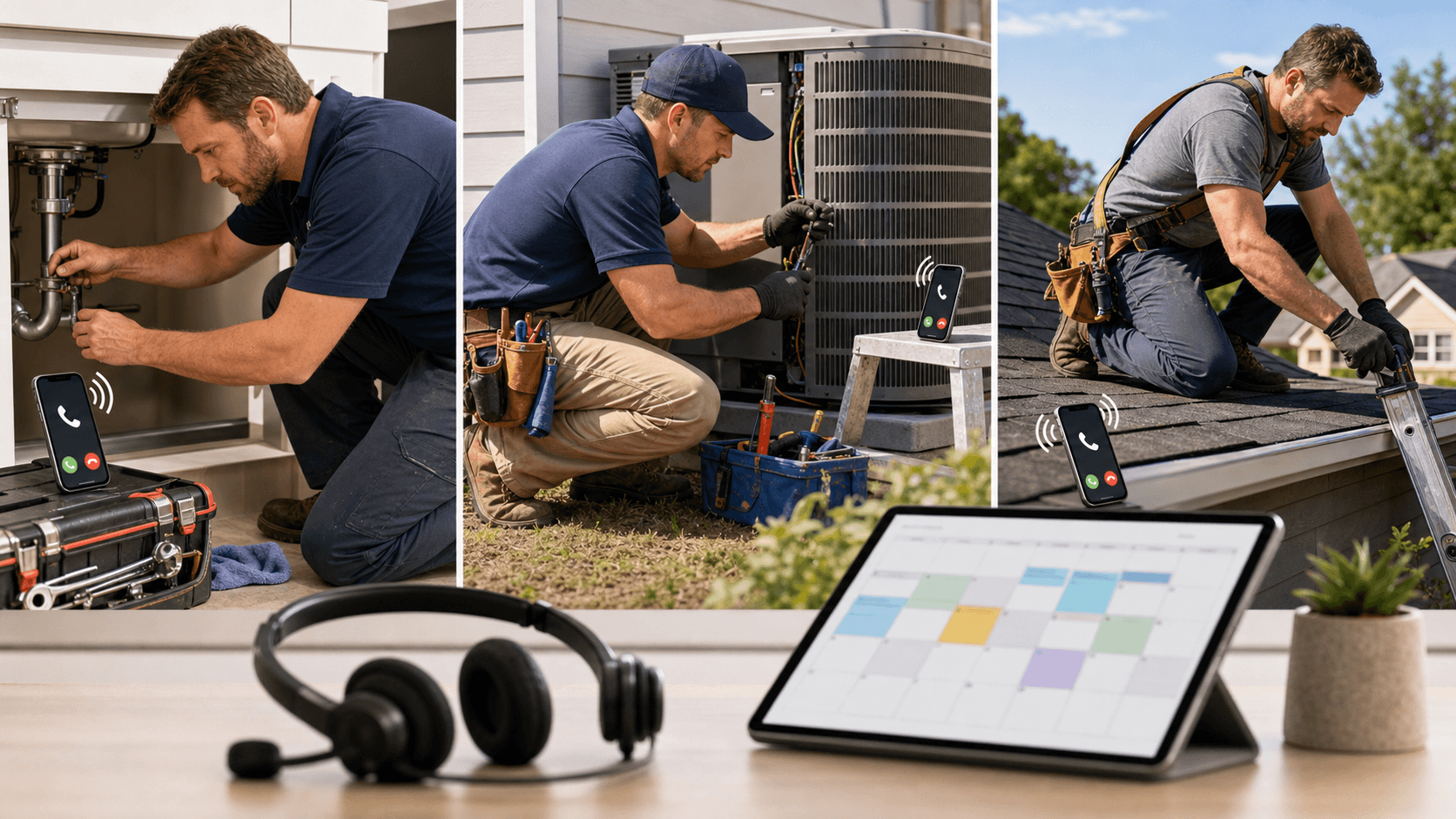
Think about a busy summer Saturday. The plumber is on a water heater swap, the HVAC tech is stuck on an AC no-cool, the roofer is meeting an insurance adjuster. Each of them misses just a few calls. No one screams, nothing breaks in the office, but hundreds or even thousands in booked work can disappear quietly in a single afternoon.
Most contractors pour time and money into marketing, ads, and yard signs, yet almost never sit down to put a number on the missed calls cost for small businesses in home services. And the truth is, plumbing, HVAC, and roofing do not lose the same amount when they miss a call. The stakes change by trade, season, time of day, and whether the caller is in a full-blown emergency situation or just asking for an estimate.
In this article, we will walk through a simple, trade-specific way to think about missed calls. We will compare plumbing vs. HVAC vs. roofing, look at seasonality and after-hours calls, break out emergency vs. estimate value, and show how an AI phone receptionist can plug this profit leak.
How Missed Calls Turn Into Lost Revenue and Reputation
When a homeowner calls a contractor, they are usually already stressed. The toilet is backing up, the AC stopped, or there is a stain on the ceiling. If no one answers, the path is simple: hang up, search again, call the next company until someone picks up.
That path from missed call to lost revenue includes a few key steps:
- Caller frustration builds fast
- Trust drops when they hear voicemail or endless ringing
- The first contractor who answers usually wins the job
To understand the missed calls cost for small businesses, it helps to break it down:
- How many calls do you get in a day or week?
- What percent get answered live?
- Of the answered calls, how many turn into booked appointments?
- What is your average job value for that type of call?
- How often do those customers come back or refer friends?
There are also hidden costs. Unanswered calls can lead to bad reviews about "never picking up the phone." Paid leads that land in voicemail burn your ad budget. When someone is searching late at night on their phone, they expect a response right away, especially younger homeowners who are used to on-demand everything.
If you are only checking messages at the end of the day or on Monday morning, that delay can be the difference between a new customer and a missed chance that never comes back.
Plumbing vs. HVAC vs. Roofing: Different Trades, Different Stakes
Not every trade feels a missed call the same way. Plumbing, HVAC, and roofing all have different job mixes, timelines, and urgency levels.
Plumbing often skews toward:
- Drain clogs
- Leaks and burst pipes
- Water heater issues
Many of these are true emergencies. Homeowners want help right now, not next week. The average job may be smaller than a full roof, but the urgency and close rate can be high.
HVAC has a blend of:
- No-heat and no-cool calls
- Maintenance and tune-ups
- System change-outs
In peak season, a missed no-cool call in the afternoon can be a lost repair plus possible future replacement. In slower months, more calls might be about maintenance or quotes.
Roofing has a different rhythm:
- Leaks and storm damage that feel urgent
- Inspections and estimates that play out over weeks
- Full replacements and upgrades
One missed roofing estimate call might not feel urgent, but it can be tied to a large project with long-term value.
Here is a simple way to think about the gap. Say a plumber, an HVAC contractor, and a roofer each miss 3 calls a day. For a month of busy season, that could mean:
- Plumbing: many of those missed calls are urgent fixes with a strong chance to book
- HVAC: mix of repairs and tune-ups that feed into future replacements
- Roofing: fewer total calls, but each one tied to bigger-ticket potential
Each trade should set its own benchmark for acceptable missed calls. The first step is to start tracking:
- How many calls by trade or department
- How many go unanswered
- What type of job each call was about
- Which calls came from paid ads versus organic search or referrals
Seasonality and After-Hours Mix: the Hidden Multipliers
Season and time of day quietly change the value of each ring. In summer, HVAC cooling calls spike as heat and humidity rise. Roofing calls go up when storms hit, gutters overflow, and shingles blow off. In colder months, plumbers deal with more frozen or burst pipes, and HVAC teams handle no-heat calls.
During peak season, a single missed call is more expensive than the same call in a slow month because:
- Urgent jobs are more common
- Homeowners are less willing to wait
- Crews are already booked, so you feel pressure and chaos
After-hours calls add another twist. Many emergencies do not wait for business hours. Night and weekend calls are more likely to be:
- Active leaks
- Full system failures
- Safety concerns like electrical smells or ceiling sagging
Contractors often run with thin or no office staff during these times. Voicemail picks up, or calls roll to a personal cell that no one can answer while on a ladder or in a crawl space. Homeowners calling at 9 p.m. with water pouring through a light fixture are not going to leave a calm message and hope for a call-back.
Try a quick thought experiment for your own trade in peak season:
- Count how many after-hours calls you think you get in a week
- Decide how many of those are likely emergencies
- Estimate a conservative close rate if you had answered live
- Multiply by your average repair or project value
Spread that over a season and then over the year, and the lost revenue gets very real.
Emergency vs. Estimate Calls: Not All Rings Are Equal
Every ring is not worth the same amount. For plumbing, HVAC, and roofing, we can roughly group calls into:
- Emergencies (no water, no AC, active leak, dangerous issues)
- Quick-fix or minor repair calls
- Estimate or quote calls for larger work
Emergencies tend to be high urgency and higher immediate revenue. It is easy to chase these and ignore softer estimate calls. But estimate calls can be tied to big projects, repeat service, and maintenance agreements.
Many contractors unknowingly undervalue estimate calls, even though:
- A small inspection today can turn into a large project later
- A quote visit is a chance to show professionalism and win trust
- A homeowner who feels cared for is more likely to sign a maintenance plan
A simple way to sort your thinking is with a mental matrix:
- Average ticket size for each call type
- Probability of closing if you answer live
- Chance of repeat work or referrals
Answering a higher share of estimate calls, not just emergencies, helps smooth revenue between busy and slow periods. It lets you build a base of planned work so you are not living only on crisis jobs.
Turn Every Ring Into Revenue with an AI Phone Receptionist
The next step is to put numbers to your own situation. Look at a recent week and ask:
- How many total calls came in?
- How many did you miss or send to voicemail?
- What mix were emergency, repair, or estimate calls?
- What is your average job value for each type, by trade?
From there, you can sketch out how much revenue those missed calls might have created over a season. Even a small improvement in answer rate can translate into steady, meaningful gains for plumbing, HVAC, and roofing companies.
This is where an AI phone receptionist like Jenny AI comes in. Instead of letting calls roll to voicemail when your office is closed, or your team is tied up in the field, AI can answer 24/7, greet callers, ask the right questions, and sort real emergencies from simple quote requests. It can qualify leads, collect details, and book jobs into your schedule so that a ring on a Saturday night or a weekday lunch rush turns into revenue instead of a silent loss.
By treating every call as an opportunity and having a reliable way to answer them day and night, contractors can protect their marketing spend, grow repeat business, and keep crews booked with the right kind of work across every season.
Stop Letting Missed Calls Quietly Drain Your Revenue
If you are serious about understanding how missed calls cost for small businesses, now is the time to act. At Jenny AI, we help you capture those lost opportunities by turning every incoming call into a chance to earn and retain customers. Our team will work with you to tailor an AI-driven call solution that fits your current workflows and growth goals. Take the first step today so fewer calls slip through the cracks and more of them turn into real revenue.