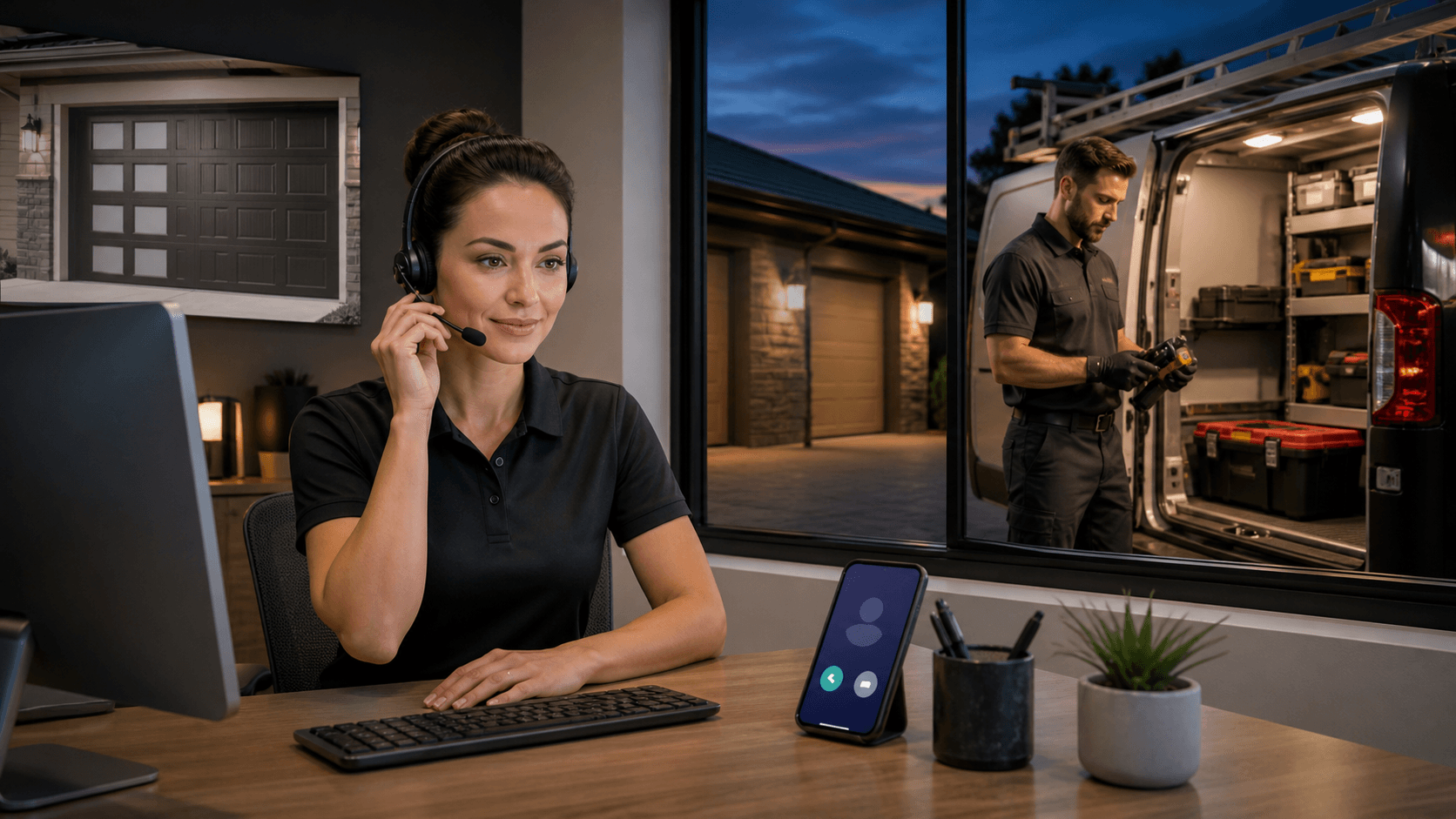
Stop Losing Emergency Calls After the Shop Closes
After-hours garage door calls are rarely casual. When a homeowner cannot close the door, cannot get a vehicle out, or sees damage that makes the home feel unsafe, they want help right away. If nobody answers, that ready-to-book job can quickly move to the first company that does.
We often see the biggest pressure points during evenings, weekends, storms, and holiday periods. The question for your business is not whether emergency calls matter. It is whether on-call technicians should answer every ring or whether a clear after-hours process can capture the lead while protecting your team's time.
The Real Cost of Relying on on-Call Techs
On-call technicians still have an important role. They may need to respond when a garage door is stuck open overnight, a vehicle is trapped, or damage creates a real security concern. But asking them to serve as the first contact for every after-hours caller can create problems.
A technician may be driving, finishing a repair, having dinner, or sleeping before an early shift. Even with the best intentions, it is hard to gather complete details while handling another task. That can lead to rushed conversations, missed information, and slower attention for callers with urgent needs.
There is also a difference between dispatching a technician for a true emergency and having that technician screen every routine inquiry. A late-night caller may only need an estimate request, a next-day appointment, or answers about a noisy opener. Those requests still deserve a fast response, but they do not always require a field technician to stop what they are doing.
Without a dependable process, callers can experience:
- A voicemail box that gives no clear next step
- Different answers depending on which technician responds
- Long gaps before anyone returns the call
- Confusion about service areas, availability, or urgency
- A feeling that your company is closed or unavailable
A garage door answering service gives you a first layer of support. It can answer promptly, collect the right details, and follow the rules your team sets for emergency dispatches and standard appointments.
How a Garage Door Answering Service Handles Urgent Calls
The purpose of a garage door answering service is not to replace your technicians' judgment. It is to make sure every caller gets a calm, professional response before the issue is sent to the right person.
Our approach to managed call handling starts with information. A caller's name, phone number, service address, garage door type, and issue description help create a useful job record. The conversation should also clarify whether a vehicle is trapped, whether the home can be secured, whether there is visible damage, and when the customer can be available for service.
From there, the call can be sorted by urgency. A door that will not close and leaves a home exposed may need after-hours attention. A remote programming request or a tune-up request can often be scheduled for the next available business-hour opening.
Consistency matters just as much as speed. Your answering process should follow approved service areas, business hours, scheduling language, and escalation rules. A customer who calls at 2 a.m. should receive the same clear guidance they would receive in the middle of the afternoon.
Set Triage Rules That Protect Tech Time
Before you assign calls to an answering team, dispatcher, or on-call technician, document your rules. Clear categories help prevent one person from guessing while another person is trying to respond in the field.
Start by defining what your business considers an emergency. The list should be simple enough for the answering team to follow, yet specific enough to avoid unnecessary overnight dispatches.
- A garage door stuck open when the home cannot be secured
- A door preventing access to a trapped vehicle
- Damage that creates an obvious security concern
- A situation involving immediate danger or injury
- Any issue your team has designated for urgent technician review
For medical emergencies or active safety threats, callers should contact emergency services. An answering process can identify concerns and direct the conversation appropriately, but it should never take the place of emergency responders.
Next, identify requests that belong in the next-business-day queue. Noisy doors, replacement quotes, weather stripping, remote programming, routine maintenance, and non-urgent opener problems can be captured with full notes and scheduled when regular availability opens.
Your escalation rules should also explain what happens after the call. Decide whether an on-call technician receives a text, a phone alert, or a dispatch notice. Set response expectations, identify who confirms appointments, and review the process with technicians regularly. A rule only works if everyone understands it.
Turn After-Hours Conversations Into Booked Jobs
Answering the phone is only the first part of lead conversion. A strong process gives the caller a clear next action, whether that means an urgent technician response or a confirmed service window for the following day.
For non-emergency requests, we recommend giving callers an available appointment window, a confirmation message, and a plain-language explanation of what happens next. That extra clarity helps keep people from continuing their search after they have already reached your business.
Every inquiry should also enter your system with job notes, urgency level, customer details, and communication history. When the office opens, your team can review unbooked leads first and follow up without asking the customer to repeat the entire problem.
Useful after-hours tracking includes answer rate, missed-call rate, average response time, booked-job rate, emergency dispatches, and revenue tied to calls received outside normal hours. These numbers show where the process is working and where callers may still be slipping away.
Prepare for Fall Weather and Holiday Call Spikes
October brings changing temperatures, rain, wind, earlier sunsets, travel plans, and more people coming in and out of the home. Those conditions can make garage door trouble feel more urgent, especially when a homeowner needs to leave for work, secure the house before bed, or move a vehicle before guests arrive.
Your scripts should ask whether the garage can be secured and whether the customer needs immediate access to a vehicle. It also helps to confirm holiday hours, technician availability, and emergency service rules before busy dates arrive. A rushed holiday response is much easier when the team already knows the plan.
Seasonal marketing needs the same level of preparation. Local service pages, PPC campaigns, our Google Business Profile messaging, and review activity can bring in more high-intent calls around repairs, safety concerns, and fall maintenance. Yet more visibility only helps when your business is prepared to answer and qualify the calls it earns.
Build an After-Hours System That Scales
A dependable after-hours process starts with basic documentation: call categories, service-area details, escalation rules, scheduling availability, and follow-up ownership. Once those pieces are in place, technicians can focus on field work and true emergencies while every caller receives a helpful response.
The strongest setup connects lead generation with lead conversion. When your website, local SEO, PPC, estimates, reviews, and call handling support one another, fewer opportunities get lost between the first ring and the booked job.
Turn After-Hours Calls Into Booked Jobs
Jenny AI helps garage door companies build a garage door answering service that supports faster responses, qualified scheduling, and consistent follow-up after business hours. Our complete system connects your call handling with the marketing tools that bring in leads. Contact us to discuss the right setup for your team.