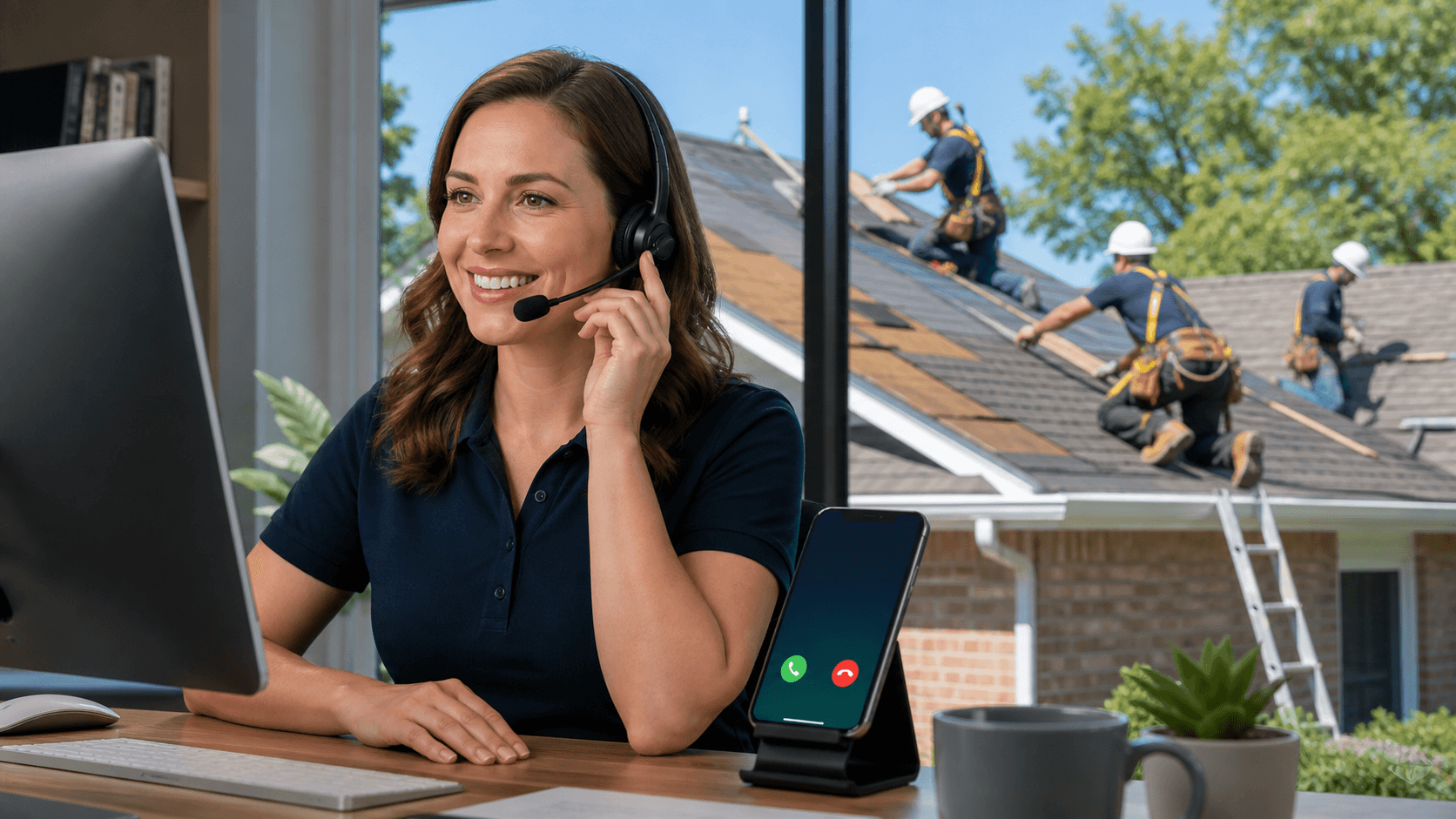
As phones get busier, the gap between a missed call and a booked job gets smaller. For contractors, that gap is where money leaks out, leads disappear, and reviews slip. The question is no longer if someone answers the phone, but how well they capture that lead and turn it into real work on your schedule.
In this article, we compare an AI receptionist vs. answering service the same way a contractor would judge any tool: does it cut missed calls, raise booking rate, keep customers happy, and lower cost per booked job? We will walk through a simple, field-tested scorecard you can use during the spring rush and beyond.
Stop Missing Calls During Peak Season Rush
Once the weather warms up, home services blow up. Phones ring back to back. Crews are on the road. Office staff are juggling calls, walk-ins, and paperwork. High-intent leads often hit voicemail or a busy tone.
For contractors, a missed call is not just a small slip. It can lead to:
- Lost jobs that never even hit your estimate board
- Lower close rates when you call back late
- Frustrated homeowners leaving bad reviews about “no answer”
- New customers moving to the next contractor after one failed call
This is why more contractors are testing an AI phone receptionist instead of traditional call centers. An AI system can answer every ring, any time of day, speak clearly, and lock in appointments on the spot.
Our goal here is simple: give you a practical scorecard to compare options by what really matters in the field, not by nice marketing words.
Missed Calls From Painful Voicemail to 24/7 Coverage
Traditional outsourcing often looks like this: a call center or answering service that tries to catch the overflow. It can help, but it is still limited by people and shifts. Agents need breaks. There are busy stretches when every line lights up at once. After-hours coverage may feel thin, and late-night or weekend calls can bring extra rules or delays.
For contractors, 24/7 is not just “open late.” It means:
- Nights and early mornings when systems fail
- Weekends packed with urgent calls
- Holidays when the weather swings and things break
- Storms or heat waves where volume jumps fast
Those are exactly the moments when human teams are most likely to miss calls, send people to voicemail, or ask callers to wait on hold.
An AI phone receptionist like Jenny AI does not have those limits. It can:
- Pick up instantly, with no hold music
- Handle many calls at once without call queues
- Route by location, service line, or tech schedule
- Keep answering during spikes, no matter how many people call at the same time
That is what true zero-missed-call coverage looks like for a contractor: every ring answered, every time.
Booking Rate Turning Every Call Into a Scheduled Job
Answering the phone is one thing. Booking the job is what pays the bills. When we say booking rate, we mean the share of inbound calls that turn into a scheduled estimate or service visit on the calendar, not just “someone will call you back.”
Many answering services are built to take messages, not to book. Common patterns include:
- Writing down caller info and sending an email or text to your office
- Avoiding firm time slots because they cannot see your real schedule
- Passing along unqualified leads you cannot serve
An AI receptionist can sit inside your existing tools and book in real time. It can:
- Check open slots on your calendar
- Ask service area and job-type questions
- Confirm the date, time, and job details before the caller hangs up
Because AI does not get tired or rushed, it can follow your proven scripts every single time. That includes:
- Qualifying the lead
- Confirming property type and location
- Asking basic pre-job questions
- Offering clear, simple next steps
When call volume jumps in late spring and summer, even a small bump in booking rate from the same calls can turn into a lot more revenue without more marketing.
CSAT That Feels Human, Not Like a Call Mill
Many contractors worry that customers will hate talking to AI. That is fair. No one wants callers to feel like they are yelling at a robot. But the real comparison is not “AI vs a perfect human.” It is AI vs an overworked call center that may feel cold and rushed.
In many call centers, callers deal with:
- Long hold times
- Agents reading scripts with little flexibility
- Language gaps or misheard details
- “Someone will call you back” instead of real booking
A modern AI phone receptionist is trained to talk in natural, conversational language. It can match your tone: friendly, direct, no fluff. It can greet callers by name, repeat back important details, and clearly summarize what will happen next.
AI can also measure CSAT at scale. It can:
- Ask quick, simple feedback questions after calls
- Flag frustrated or confused callers for review
- Track which scripts lead to smoother calls
- Make updates fast based on your guidance
The goal is not to trick people into thinking they spoke to a human. The goal is for them to hang up feeling heard, respected, and confident that help is on the way.
Cost Per Booked Job the Contractor’s Real Scorecard
Contractors are used to thinking in cost per lead and cost per job. Phone handling should be judged the same way. Instead of only looking at hourly or per-minute rates, it helps to focus on cost per booked job from inbound calls.
With many call centers or answering services, you may see:
- Per-minute charges that spike when calls run long
- Higher rates outside regular office hours
- Extra charges for dispatching or special instructions
- Hidden cost from calls that never turn into booked work
An AI receptionist usually runs on simpler, more predictable pricing and can scale to busy seasons without new hiring or overtime.
A simple mental formula you can use is:
Total Reception Cost divided by Number of Booked Jobs.
If you test AI next to your current setup for a month or two and track that one number for each, the winner becomes clear fast.
Building Your Own AI vs. Outsourced Dispatch Scorecard
To compare an AI receptionist vs. answering service in a real-world way, you can set up a basic scorecard. During spring and summer, track:
- Call volume for each channel
- Answer rate and time to answer
- Booking rate (calls to appointments)
- CSAT from quick surveys or ratings
- Cost per booked job for each channel
One simple test is a 30-day trial. Keep your current system in place, and route a section of calls to an AI receptionist like Jenny AI. Then compare the four core metrics side by side.
When talking with any provider, ask clear questions:
- Do you book directly on my calendar?
- How do you qualify leads and handle bad fits?
- What happens on nights, weekends, and holidays?
- How can I see performance reports in plain language?
- Who owns the call data and recordings?
This shift is about more than just “answering the phone.” It is about building a reliable lead capture system that will still work when staff changes, seasons swing, or your business grows.
Turn Every Call Into a Booked Job This Season
At the end of the day, the AI receptionist vs. answering service debate is not theory. It is a scoreboard. Which one gives you fewer missed calls, a higher booking rate, better CSAT, and a lower cost per booked job when the phones are busiest?
Jenny AI was built to help service-based small businesses turn more calls into scheduled work, with less stress on the office and the field. The marketing that drives those calls is already paid for, so tightening up how every ring is answered can be one of the fastest ways to add booked jobs and happier customers without adding to payroll.
See Exactly How Modern Call Handling Fits Your Business
If you are weighing your options, our detailed comparison of AI receptionist vs. answering service shows how Jenny AI can help you capture every call without sacrificing a personal touch. We walk you through setup, real call flows, and how our AI handles complex requests so you know what to expect from day one. Explore the launch plan today to see how quickly you can move from missed calls to consistent, high quality conversations.