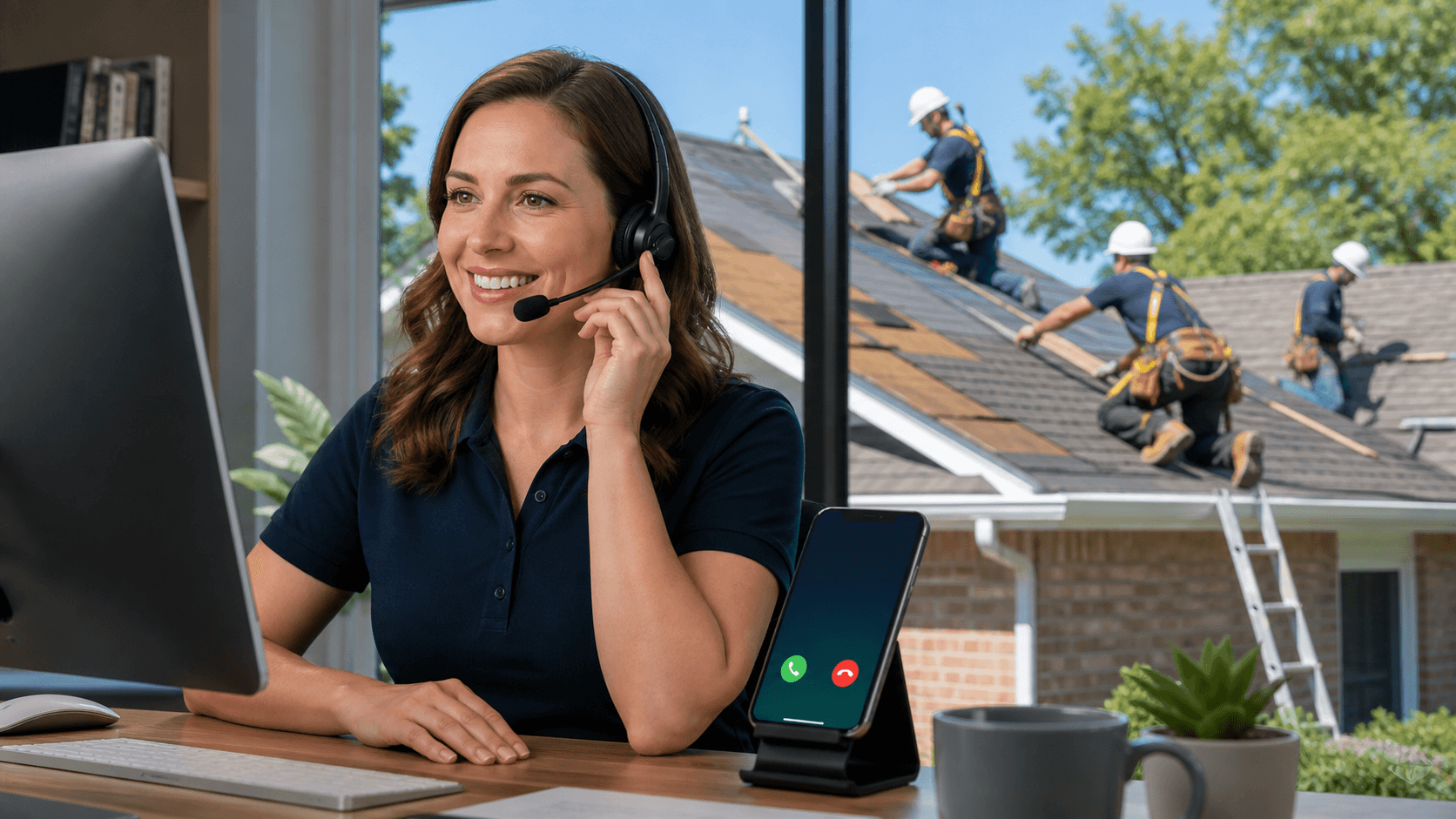
Spring hits, the phone starts ringing off the hook, and it feels like every homeowner in town wants work done right now. For contractors, those calls are not just noise; they are real jobs, real revenue, and a full calendar if you can catch them. Missing even a few of those calls can mean empty gaps in your schedule later, and someone else winning the job you should have had.
This is where the big question comes in: when you cannot grab every call yourself, what is better for your business, an AI receptionist or a traditional answering service? We are going to break down how each option handles calls, books work, fits into your day, and protects your time, so you can choose what actually helps you land more good jobs instead of just collecting messages.
Stop Missing Calls During Your Busiest Season
Once late March hits, things ramp up fast. Homeowners start asking about roof repairs after winter storms, HVAC tune-ups before the first hot day, yard cleanups, plumbing fixes, and electrical checks. Calls come in while you are on ladders, under sinks, or driving from one job to the next. You cannot be on the phone and on the tools at the same time.
Traditional phone coverage usually looks like this:
- The owner trying to answer between jobs
- A part-time helper or spouse juggling calls and other tasks
- Basic voicemail that fills up with "please call me back" messages
That setup works on a slow week, but breaks down when:
- Two or three new leads call at the same time
- An emergency request comes in while you are already on-site
- You are booked out for days and need to carefully protect your schedule
So the real question becomes: AI receptionist vs. answering service, which one helps you capture more qualified, ready to book jobs, not just names and numbers on a pad? Fully managed AI receptionists like Jenny AI are built around that problem, answering, qualifying, and booking jobs for contractors 24/7 without adding one more person to your payroll.
What Contractors Really Need From a Call Answering Solution
Contractor life is different from a normal office. You are handling:
- Urgent "no heat," "no power," or "water on the floor" calls
- Crews moving across town on a tight schedule
- Quick ballpark estimates and service questions
- A calendar that fills up fast and changes all the time
From any call answering option, three outcomes matter most:
- Qualify serious leads fast so you know which calls deserve your attention.
- Book estimates or service visits on the spot while the homeowner is ready.
- Filter out spam, wrong numbers, and tire kickers so your phone is not a constant distraction.
Spring adds even more pressure. When the weather turns nicer, people think about repairs they put off all winter, and they do not wait long for callbacks. They call down a list of contractors until someone answers, gives clear next steps, and puts a time on the calendar.
That is why "just taking messages" usually falls short. If an answering service or voicemail only sends you a note to return calls later, you are already behind. By the time you listen and respond, many homeowners have already booked with someone else who picked up and scheduled them right away.
AI Receptionist Vs Answering Service for Modern Contractors
First, let us define the two options in plain terms.
A traditional answering service usually means:
- Human operators in a call center
- A simple, shared script for many different businesses
- Collecting basic info and sending messages by email or text
They rarely have the authority or tools to:
- Fully qualify the job
- Check your real availability
- Book firm appointments on your calendar
An AI receptionist, like Jenny AI, works differently. It is trained on:
- Your services and common jobs
- Basic pricing or trip fee rules you set
- Your service areas and travel rules
- Your live calendar and booking rules
So when a call comes in, the AI can:
- Answer FAQs about what you do, where you work, and when you are available
- Walk through multi-step questions without losing track of details
- Keep the full conversation in context so answers stay consistent
Speed and accuracy matter too. An AI receptionist can:
- Pick up on the first ring, every time, all day and night
- Handle several calls at once, so you never get a busy signal
- Capture names, addresses, and times without mishearing over loud background noise
Some people think human agents always feel warmer. The truth is, call center operators are often rushed and juggling many different companies, which can sound generic. A well-trained AI can be tuned to your company name, greeting, and tone, so every caller gets the same polite, clear, on-brand experience.
Cost, ROI, and Lead Quality in Busy Seasons
When you compare options, it helps to think past the surface and look at what each one does for your bottom line. Answering services usually charge in ways that spike when you are busiest, like per minute, after hours, or during weekends and holidays. AI receptionists tend to follow a more steady plan, without surprise overtime or payroll stress.
The bigger factor is revenue. An AI receptionist that can qualify and book jobs directly on your calendar:
- Fills your schedule with real, ready-to-go work
- Cuts down on no-shows by giving clear confirmations
- Turns more first-time callers into actual customers
Lead quality is also different. AI can follow a detailed script you define, including:
- Type of job and rough size
- Address and service area check
- Timing and flexibility
- Basic budget range or decision maker info
- Urgency level, such as "emergency today" or "estimate this month"
Those details make it much easier to:
- Sort which leads get top priority
- Assign jobs to the right tech or crew
- Protect your time from tiny or out-of-area jobs
During spring and summer spikes, scaling is where AI really shines. When call volume doubles, you do not have to scramble to add more hours or staff. The AI simply handles more calls at once so you keep margins steady while booking as much solid work as you can handle.
How AI Receptionists Fit Into Contractor Workflows
An AI receptionist is most useful when it fits how you actually work, not the other way around. It can be trained on your specific services, like:
- Seasonal tune-ups for HVAC systems
- Roof inspections and small repairs
- Lawn care packages and cleanups
- Emergency plumbing or electrical visits
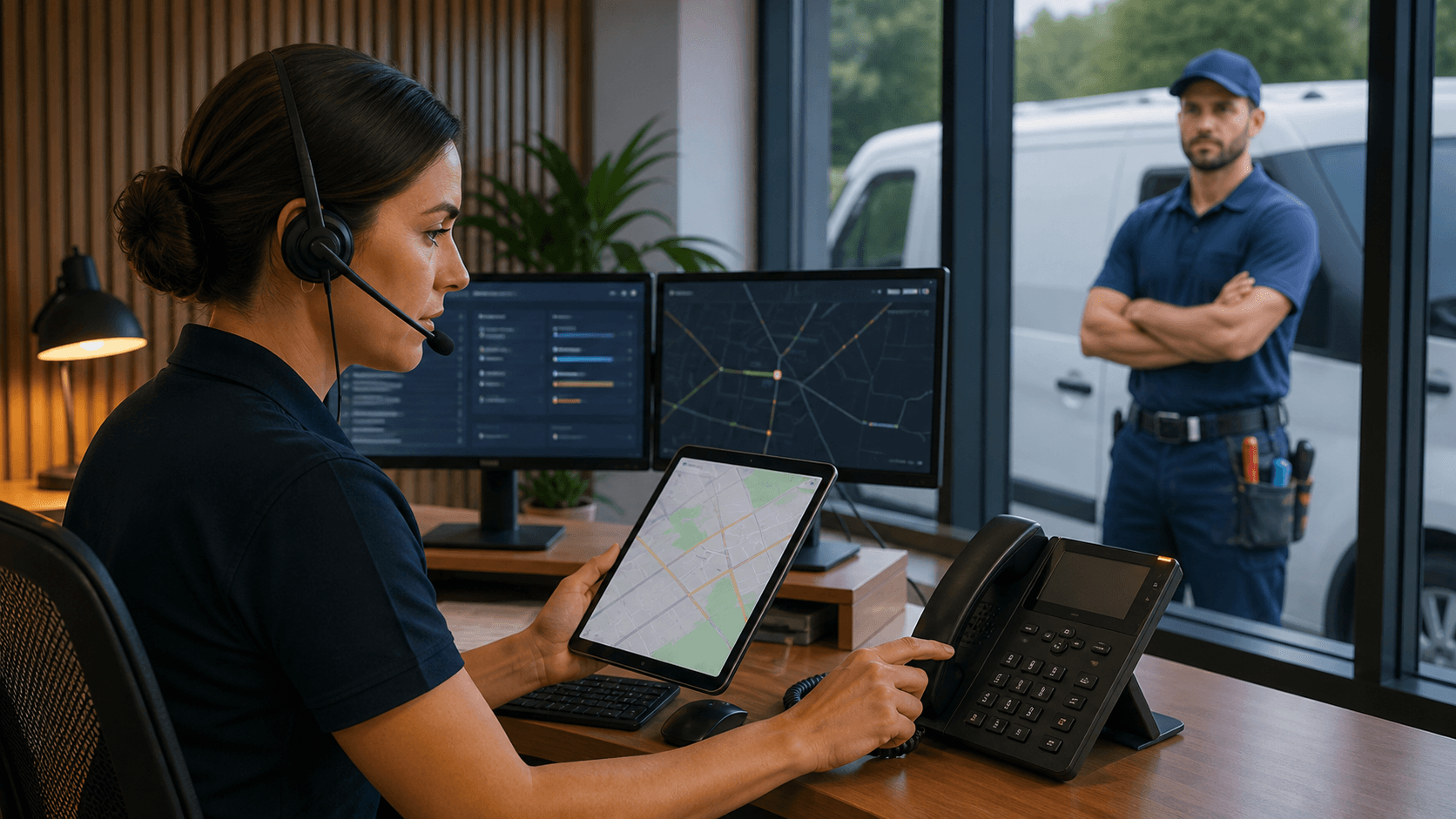
It can also follow your service zones, travel limits, and normal job lengths so it only offers time slots that truly fit your day. With real-time calendar integration, the AI can:
- See open times for estimates and service
- Book appointments instantly while the caller is on the line
- Avoid double-booking you or your crew
That means fewer callbacks while you are up on a roof, in a crawlspace, or driving between jobs.
After-hours and weekends are a big test. For a 10 p.m. leak or breaker issue, you can set rules like:
- Mark the call as an emergency
- Alert the on-call tech by text or email
- Offer the first available emergency slot on the calendar
This also takes pressure off any office staff or family members who help with calls now. Instead of trying to answer every ring, they can focus on higher-value work like customer follow-up, ordering materials, or sending invoices, while the AI receptionist handles the constant flow of inbound calls.
Evaluating AI Receptionist Vs Answering Service for Your Business
When you compare options, a simple checklist helps. Ask yourself:
- Can it book real appointments on my actual calendar?
- Can it qualify leads the way I want, not just take basic info?
- Does it connect with the tools I already use to schedule work?
- Is pricing steady when my call volume spikes?
- Does it understand my trade language and common job types?
Watch for red flags with answering services, such as:
- Mispronounced local streets or neighborhoods
- Confusion about which services you do or do not offer
- Long hold times that frustrate callers
- Delayed messages that sit before you even know there was a call
An AI receptionist is usually a better fit if:
- You are an owner-operator or small crew without full-time office staff
- You miss calls while out on job sites or driving
- Your call volume jumps hard during busy seasons
- You want to sound bigger and more organized than you are today
If you worry about change, you do not need to switch everything at once. Many contractors start by sending overflow or after-hours calls to AI first. Once they see more booked appointments and fewer missed calls, they decide how far to expand from there.
See How Jenny AI Transforms Every Incoming Call Into Revenue
If you are deciding between an AI receptionist vs. answering service, we can help you map out exactly what impact each option will have on your customers and your bottom line. Our team will walk you through real call scenarios, expected cost savings, and how quickly you can be live with Jenny AI. Start your launch plan today so every missed call becomes a captured opportunity.