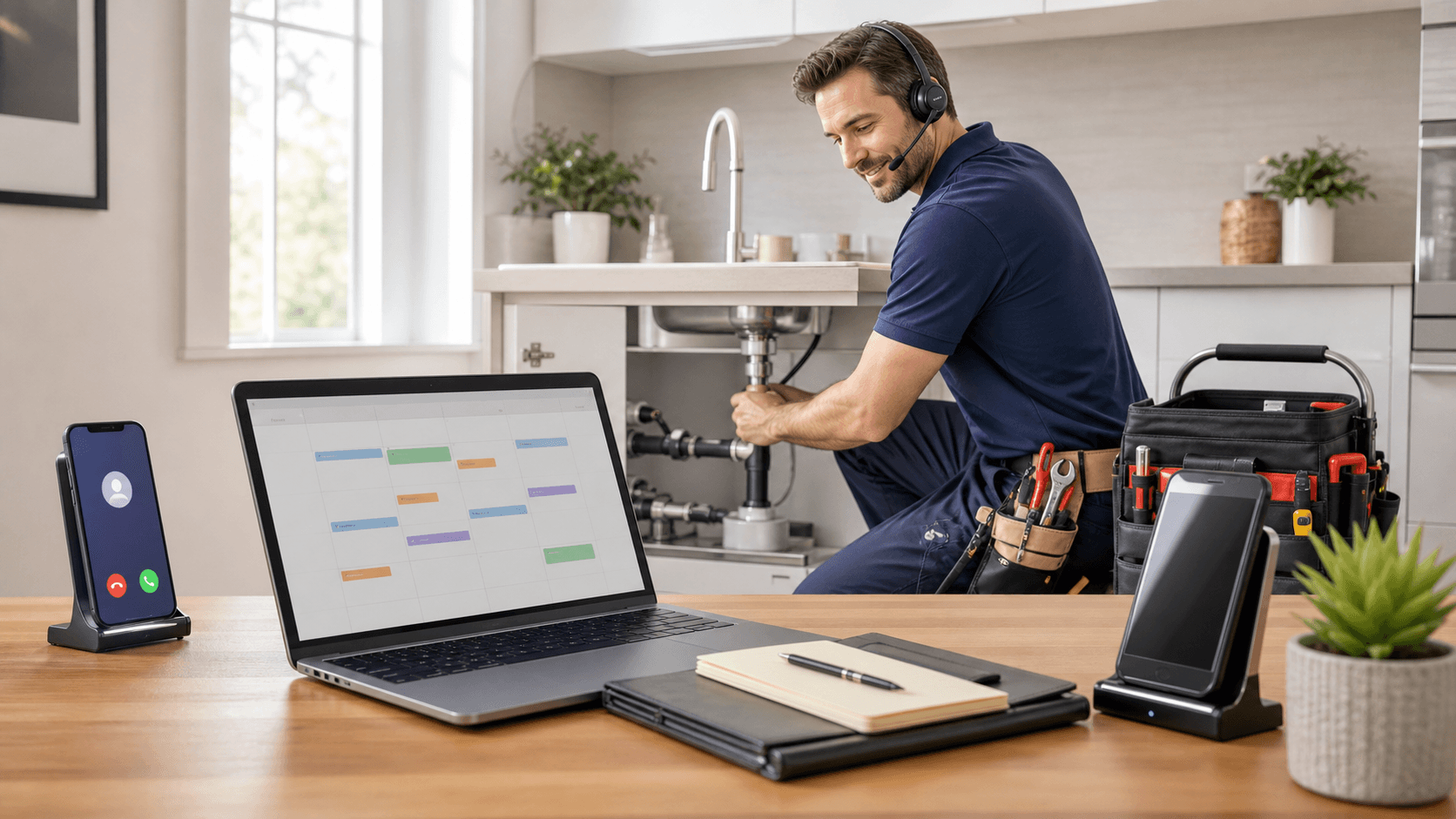
Too Busy to Answer the Phone? Build a Fail-Safe Call Plan
Being too busy to answer the phone feels like a good problem, until it starts costing you jobs. When summer hits, the work is there, but if no one picks up, that work goes somewhere else. A solid call plan keeps your phones under control so you can stay in the field, keep crews moving, and still capture the best jobs.
In this article, we will walk through why missed calls hurt more than most owners realize, the types of calls you must control, and how to build a simple, real-world call plan that works even in peak season. Then we will show how an AI receptionist fits into that plan so you are covered 24/7 without burning yourself out.
Stop Letting Missed Calls Steal Your Best Jobs
Early summer hits, the heat cranks up, and the work comes fast. Crews are booked, trucks are on the road, and you are bouncing between estimates, job sites, and supply runs. While you are under a sink, in an attic, or talking with a homeowner in their driveway, your phone lights up again and again. You see the missed calls later and think, "I will get back to them tonight." But by then, those callers may already be booked with someone else.
Those peak-season calls are often your highest-value jobs. Homeowners want same-week AC service, storm damage fixed before the next rain, irrigation working before the weekend. They are not shopping for weeks. They are picking whoever answers quickly, sounds professional, and can get them on the calendar.
The problem is not that you are lazy or disorganized. The problem is timing. You are busiest on the phone at the exact same moments you are busiest in the field. That is when your best leads call, and that is when you are least able to answer. You do not need longer days or more stress; you need a call plan that keeps every caller covered, no matter what you are doing.
Why Being Too Busy to Answer the Phone Costs You Big
Missed calls are not just a small annoyance. They stack up into real lost revenue. Every time the phone rings and no one answers, there is a strong chance that was a job ready to schedule. This hits hardest for:
- Emergency or urgent work like AC failures during a heat wave
- Seasonal jobs like sprinkler start-ups or cleanups
- Same-week repairs when the weather is rough or storms roll through
- High-ticket projects where homeowners want quick answers
There is also hidden damage. Many callers do not leave voicemails. Some hit a basic answering service that just takes a name and number. That does not feel helpful when someone is hot, worried, or stressed about their home. They hang up thinking, "I will just call the next company."
Today, people expect a fast, human-style response. They search on their phone, tap the first few listings, and keep going until a real person, or something that feels like a real person, answers. If you are always "too busy to answer the phone," your business can end up stuck at the same size year after year. The calls are coming, you are just not catching them.
The Three Types of Calls Every Contractor Must Control
Not all calls should be handled the same way. A strong call plan starts by knowing what type of call is coming in and what should happen next.
- New leads ready to book
These callers have already searched, read reviews, and compared a few options. They are not looking for a long chat. They want:
- A friendly greeting
- A few smart questions to confirm the job is a fit
- Clear next steps and a confirmed time
If this type of call hits voicemail, you are almost guaranteed to lose many of them. These calls must be answered live, qualified, and put on the calendar as fast as possible.
- Existing customer calls
These are people who already know you. They might need to:
- Change an appointment
- Ask about a warranty issue
- Add extra work to an upcoming visit
They need quick, respectful help. If they feel ignored or bounced around, you risk losing repeat business and referrals.
- After-hours and emergency calls
Some problems cannot wait until morning. Late-night leaks, AC failures during a heat spike, or electrical issues all need clear, calm handling. You need a rule for who takes:
- True emergencies at night or on weekends
- Urgent but not life-or-death problems
- Non-urgent messages that can wait
When each call type has a defined path, fewer calls get lost in voicemail or buried in text threads.
Build a Fail-Safe Call Plan That Works in Real Life
A call plan only works if it matches your day-to-day life. For many contractors, that means:
- Crews in the field most of the day
- You hopping between jobs, estimates, and supply houses
- Summer months packed with time-sensitive calls
Instead of hoping you will "catch up on calls later," build a simple fail-safe structure:
- Primary: Calls ring your main number or mobile for a short window, maybe 2 or 3 rings. If you grab it, great.
- Secondary: If you are busy, calls auto-transfer to a trained receptionist or AI receptionist that can actually help, not just take a message.
- Tertiary: Clear rules for what goes to voicemail, what triggers a text follow-up, and how fast those get returned. Set targets like "same-day" or "within one hour," and stick to them.
During busy months like June through August, your call flow may need stronger backup. That might mean having more calls go straight to your receptionist or AI during certain hours, or tightening how many jobs you try to personally answer while also working in the field.
Whatever you choose, write it down. Document:
- Your hours
- Who is primary, who is backup
- What counts as an emergency
- Which jobs get priority on the schedule
That way, anyone who helps with calls, and every tool you use, follows the same playbook.
How an AI Receptionist Makes Your Phone Truly 24/7
This is where an AI receptionist service like Jenny AI fits in. A fully managed AI receptionist answers calls right away, speaks in a natural, human-sounding voice, and asks the right questions to qualify the caller. It connects directly to your calendar so it can book jobs for you around the clock.
In a fail-safe call plan, the AI becomes your always-on teammate. When you are driving, up on a ladder, under a sink, or closed for the night, it can:
- Greet callers in a friendly, consistent way
- Ask about the issue, location, and timing
- Share basic info you approve, like service areas or job types
- Offer real appointment times and lock them into your schedule
Unlike a basic answering service that just promises someone will "call you back," the AI can have a real conversation. It can follow rules you set, such as:
- Which services you want to promote first
- What jobs to book on certain days or time blocks
- When to mark something as urgent and send it to you or an office manager
You stay in control. You decide what the AI can book, what it should flag for a callback, and what to send to voicemail. The result is that callers always get quick, professional help that feels like a top-tier office staff, even if you are a small team working long days in the field.
Turn Missed Calls Into Booked Summer Jobs
Summer is when homeowners are ready to spend on their homes, comfort, and safety. Your call plan, not your work quality, often decides whether that money lands with you or with the next contractor on the list.
A simple way to start is to:
- Look at last month's missed calls and voicemails and see how many turned into jobs
- Define your three call types and decide who should handle each
- Set primary and backup routing rules so no call hits a dead end
- Decide what your AI receptionist can book on your calendar, and what should be sent to you
Once your fail-safe plan is in place, being too busy to answer the phone stops holding you back. It becomes a sign that your business is growing, and that you finally have the systems to keep up. With Jenny AI covering your calls, you can stay focused on the work in front of you, knowing every ring is handled and every good lead has a real chance to turn into a booked job.
Stop Missing Calls And Start Capturing Every Opportunity
If you are Too busy to answer the phone, we make sure your customers are still greeted, guided, and booked in real time. At Jenny AI, we help you handle high call volume without hiring more staff or stretching your team thinner. Let us take care of routine questions and scheduling so you can stay focused on the most important work. Start your launch plan today and keep every valuable call working for your business.