Stop Losing Qualified Clients After Hours
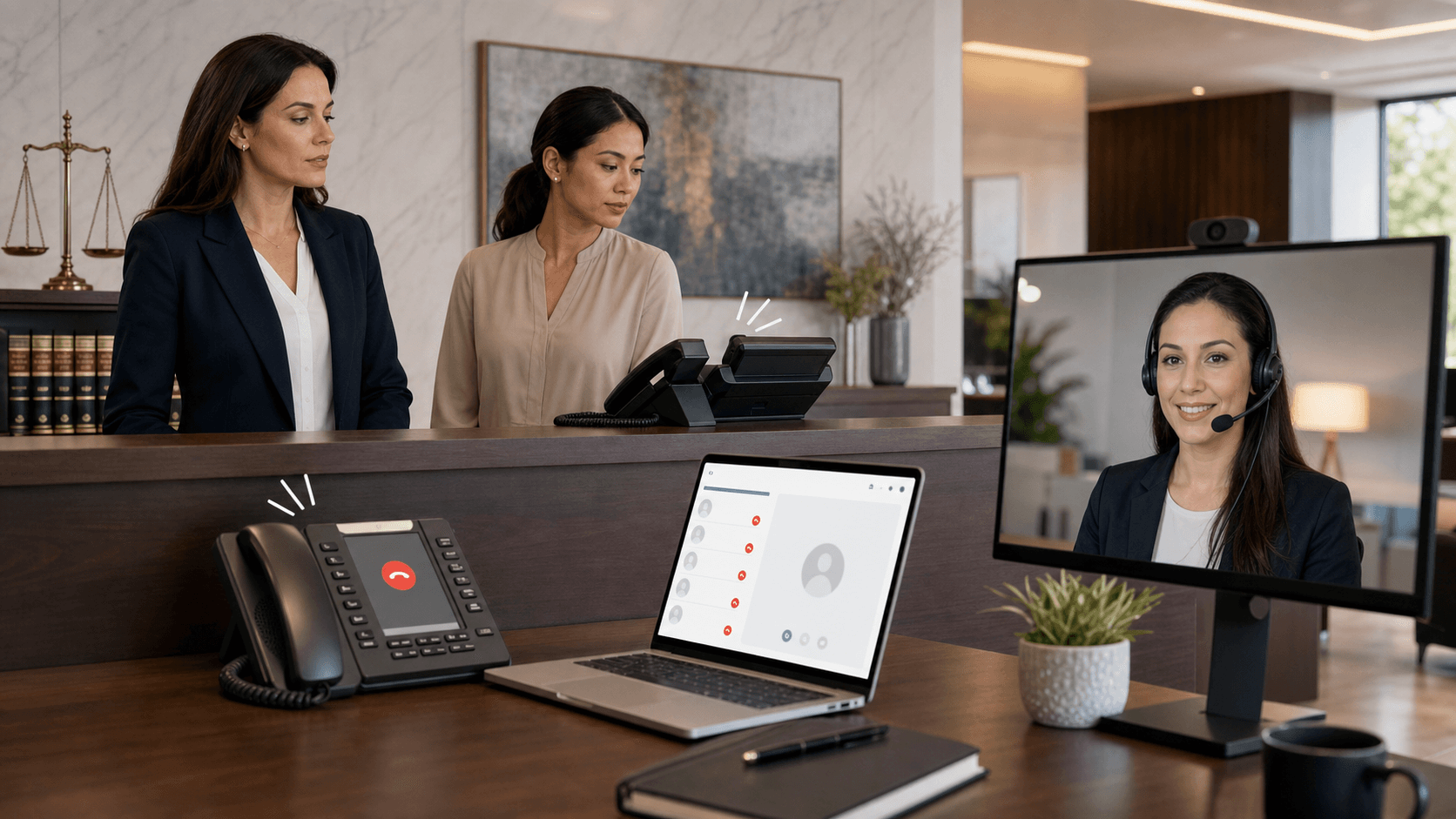
Law firms work hard to bring in good clients, then lose them to voicemail. When phones ring after hours, on weekends, or during holiday breaks, those calls often go unanswered. For many firms, that is where strong cases slip away quietly.
Summer makes this worse. Courts move faster before fall, trial calendars fill up, and partners rotate through vacation. Staff stretch to cover long days, and phone coverage gets patchy. When a stressed caller with a time-sensitive issue hears a generic voicemail, they often hang up and call the next firm on their list.
This is where better options for legal answering service support come in. Modern tools, including AI receptionists, can protect your intake around the clock without adding more people to your payroll or asking your team to be on call every night. We will walk through how traditional legal answering services work, why they often fall short, and what newer solutions can do to keep client experience and compliance safe.
Why Traditional Legal Answering Service Models Fall Short
Traditional legal answering services rely on pools of human agents. They follow basic scripts, answer the phone with your firm name, take a message, and sometimes attempt a warm transfer if someone is available. On paper, that sounds fine. In practice, there are gaps.
Common pain points many firms feel include:
- Inconsistent handling of legal terms and practice area details
- Rigid scripts that do not adapt when callers share complex stories
- Slower pickup or long holds during busy times
- Higher costs when you want true 24/7 or holiday coverage
Legal work is full of nuance. Agents who handle calls for many different businesses may miss important cues, skip follow-up questions, or misunderstand key words. That can lead to poor notes or incomplete intake, which your attorneys need to clean up later.
There are also confidentiality worries. When you use a pooled service, multiple third-party agents may hear sensitive details. If they misstate what the caller said or forget to log part of the story, your firm is the one facing the risk, not the answering service. This problem often peaks during summer, when your office is juggling vacations, tight litigation schedules, and a higher call volume at odd hours.
Intake Quality and Compliance Risks You Cannot Ignore
Intake is not just about being polite on the phone. It touches ethics and risk. Small mistakes at this stage can create big problems later.
Some examples of intake issues that can cause trouble:
- Wrong or missing contact information
- Skipped or rushed conflict check questions
- Not enough detail to understand urgency and deadlines
- Confusing notes that do not match what the caller said
A generic legal answering service may promise to follow your script, but in real life, agents may forget steps or improvise when a caller sounds upset. Conflict protocols can be skipped, and firm-specific screening questions can get lost when the queue is full and the clock is ticking.
Confidentiality can also take a hit. Calls might be answered in noisy rooms, with other agents within earshot. Shared workspaces and rotating staff mean more people are exposed to private facts. When a scared caller reaches out about a DUI, accident, or family emergency, they need calm, clear, and structured intake every single time, not "mostly" or "when things are slow."
Smarter Alternatives to the Old-School Answering Service
The good news is that law firms are not stuck with the old model anymore. New options give you more control over intake and client experience.
Modern alternatives include:
- AI phone receptionists that answer, qualify, and book calls 24/7
- Phone systems connected to your CRM or case management tools
- Hybrid setups that blend your in-house staff with automation
AI receptionists like Jenny AI give you always-on coverage without extra tech stress. You set firm-specific scripts and qualifying questions for each practice area. The AI answers every call, asks the right questions in the right order, and books directly onto your calendar when the caller is a good fit.
This protects intake quality in a few key ways:
- Standardized flows, so key questions are never "forgotten"
- No bad days, sick days, or distracted agents
- Instant capture of caller data that can sync into your systems
Because AI scales easily, it can handle holiday spikes, summer weekend calls, and late-night emergencies with the same steady approach. You get consistent intake patterns, while your team focuses on legal work instead of chasing missed calls.
Protecting Confidentiality and Ethics in an AI World
Many lawyers have fair questions about AI. Is it secure enough for client intake? What about privilege and confidentiality? How does this fit with bar rules on outsourcing client-facing work?
When you look at AI-powered alternatives to a traditional legal answering service, it helps to focus on a few key areas:
- Encrypted call handling and data storage
- Tight access controls so only your firm sees your callers' details
- Clear data ownership rules that keep you in control
- Flexible retention settings that match your policies
A well-designed AI receptionist can actually lower some risks. It does not make casual comments about cases. It does not take screenshots or share stories with friends. It does not go off script. It can give consistent disclaimers, remind callers that no attorney-client relationship is formed until your firm accepts the case, and be very clear that it is a receptionist, not legal counsel.
To stay comfortable with ethics rules, many firms create a simple review process. They read vendor policies, check how data is stored, and document their due diligence. They also get sign-off from partners or compliance teams before turning the system on. That way, everyone knows how the tool works and where the guardrails are.
Turning Missed Calls Into Booked Matters Year-Round
Traditional legal answering services are usually better than sending every caller to voicemail, but they still leave gaps. Newer tools, especially AI-driven phone receptionists, can protect intake in a more steady, affordable, and ethics-friendly way, all without reshaping your whole tech stack.
A smart next step is to look at your own recent call history. Many firms quietly lose strong matters in places like:
- Missed calls outside office hours
- Weekend and holiday voicemails that no one checks quickly
- Overflow periods during heavy litigation weeks
From there, you can tighten your intake process. Define your ideal script. Decide which questions must always be asked for each practice area. Then test an AI receptionist like Jenny AI on real calls and compare the number of booked and qualified matters with your old approach.
When we modernize how phones are answered, we give stressed callers a better first contact and give our firms a more stable intake pipeline. That means heading into the next busy season with fewer surprises, more predictable new matters, and a client experience that feels calm and professional from the very first ring.
Convert More Callers Into Clients With 24/7 Legal Intake Support
If you are ready to stop missing calls and start capturing more qualified clients, our team at Jenny AI is here to help. Our AI-powered reception can greet every caller, collect key case details, and route urgent matters in real time so your attorneys stay focused on billable work. See how our legal answering service can integrate with your existing tools and workflows in just a few days. Reach out today to explore a tailored setup that fits your firm's size, practice areas, and growth goals.